In: $200M. Out: 450 Journalists. Why?
How a levy designed to save journalism became a transfer to the four companies that already captured the first one.
Good evening, reader.
The News Bargaining Incentive moved through consultation in the same eight weeks the country spent arguing about capital gains tax. The Budget 2026–27 CGT discount changes consumed the political-economy commentary cycle from late March to mid-May; the NBI Charge Bill closed for submissions on 18 May. CGT touches the property-owning readership of every metro masthead and the prime-time demographic of every news bulletin. NBI distribution mechanics touch roughly a hundred small publishers and the long-run plurality of Australian discourse. The first got wall-to-wall coverage. The second got column-inches measurable in single digits.
The four incumbents positioned to capture the bulk of the NBI offset pool are the same four organisations that set the editorial agenda determining what counts as a story this fortnight. Not by conspiracy, by ordinary editorial economics. The instrument that re-concentrates the fourth estate received less coverage because it was being drafted by the beneficiaries of fourth-estate concentration regulatory capture amplified by salience capture.
A tax-reform economist should find clause 9 intolerable on broad-base, low-rate grounds: a selective exemption for one class of platform corrupts the tax base. The CGT changes are a defensible structural reform on their merits. The NBI is a defensible levy paired with an indefensible distribution mechanism. One is being scrutinised in detail. The other is being waved through under cover of the first.
What is the NBI?
The News Bargaining Incentive (NBI) draft legislation entered the public record on 28 April 2026. Treasury consultation closed 18 May. The press story is the familiar one: Big Tech versus publishers, Australia versus Silicon Valley. That story is not wrong, but it is not what the bill does.
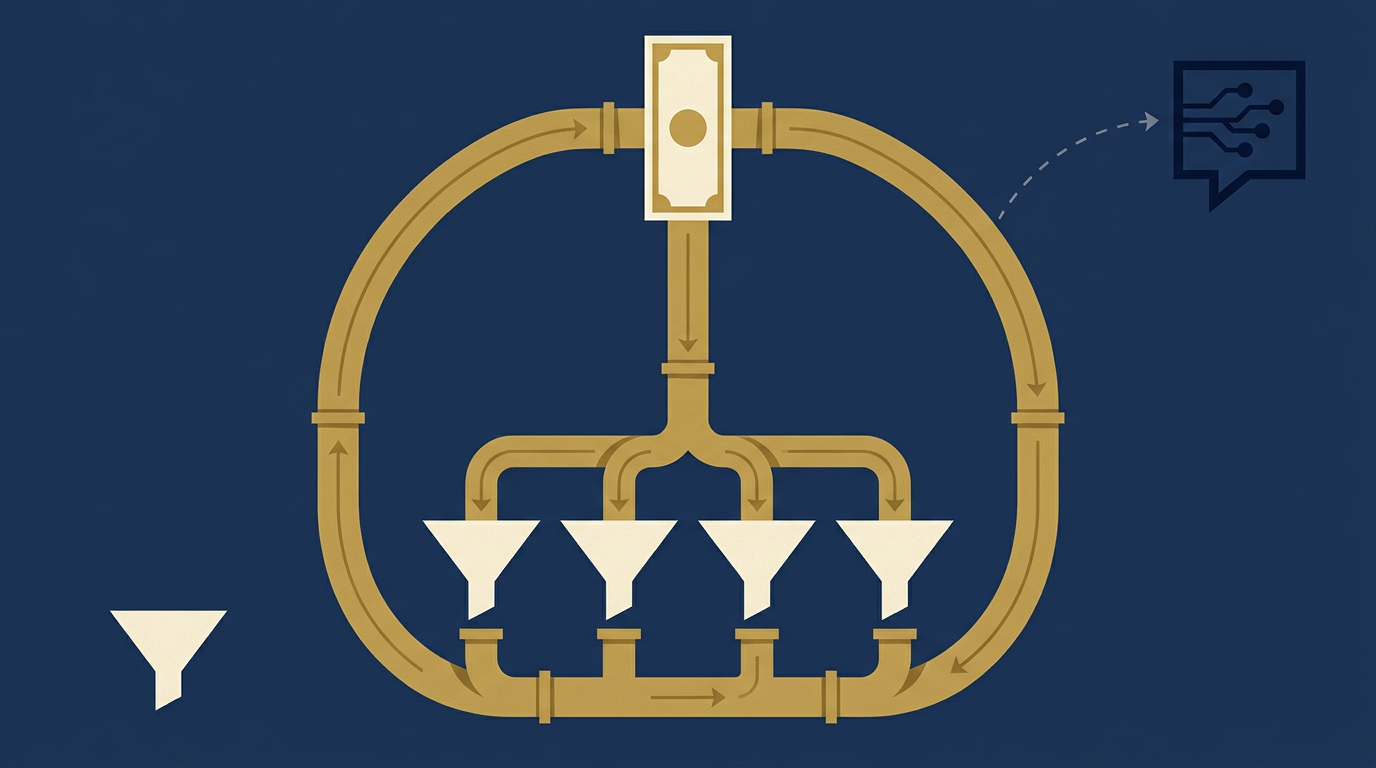
What the bill does is set up a closed loop. The same four conglomerates that captured roughly 60 to 70 per cent of the original 2021 News Media Bargaining Code (NMBC) pool are positioned to capture roughly 60 to 70 per cent of the new pool. The mechanism that captured the first pool has been carried forward almost intact. And the only contemporary mechanism that actually extracts publisher value at scale (LLM summarisation) has been written out of the bill.
Let's get into it.
The NBI is a structurally well-designed levy attached to a structurally broken distribution. The levy side closes the loophole Meta exploited in 2024: the 2.25 per cent charge applies to any large platform with Australian revenue above $250 million whether or not it carries news content (Treasury, 28 April 2026). Platforms can offset the levy at 150 per cent for deals with larger news businesses and 170 per cent for SMEs (KPMG, 30 April 2026). The 170 per cent SME rate is innovative. That is the good news.
The structural problem sits one layer below. The Charge Bill caps each platform's offsets from a single recipient at 25 per cent of total liability so a platform with a $100 million liability hits full offset by routing $25 million each to four publishers (B&T, 24 May 2026). The cap was framed as a mechanism to spread the money around. What it actually does is set the floor for concentration at exactly the number the incumbents need. The UTS Centre for Media Transition is blunt: the worst case is that "Google, Meta and TikTok make deals with the same four news media businesses, and that's the end of it" (UTS CMT). The cap is the policy.
The first pool. The receipts.
The NMBC passed in 2021 on the promise that Google's and Meta's money would prop up Australian journalism. Approximately $200 million a year flowed; 60 to 70 per cent went to News Corp, Nine, and Seven (Purcell, 29 April 2026). What those three did with the money in 2024:
News Corp launched a US$1 billion share buyback in July 2025 (over US$175 million repurchased by April 2026), then announced an AUD$65 million cost-out with up to 100 redundancies in May, plus 20 more editorial cuts in July across the Tele, Courier Mail, Mercury and Advertiser.
Nine Entertainment acquired QMS Media for AUD$850 million in March 2026. June 2024: 200 jobs cut, 90 in Publishing across the SMH, The Age, AFR and Brisbane Times. CEO Mike Sneesby resigned in September.
Seven West Media announced an AUD$100 million cost-out in June 2024, 100 to 150 redundancies including the CRO and CMO.
Around 450 journalists were made redundant across the three in 2024. Former Nine CEO Chris Janz, on the record via Mumbrella, said NMBC funding was "primarily used to pay down debt or reward shareholders rather than being directly invested in new journalism." The counterexamples: ABC NMBC payments funded 60 new regional positions across 19 locations including 10 with no prior coverage, and supported regional bureaus including Charleville. SBS expanded multilingual capacity. Public broadcasters used the funds for their stated purpose. Commercial conglomerates used them for capital management. No use-of-funds reporting obligation existed. The NBI does not fix that.
The closed loop, drawn in arithmetic
Two mechanisms compound. First, the four-deal floor from the 25 per cent offset cap. Second, the FTE-weighted distribution formula in the Statutory Payment Scheme; levy payments distributed in proportion to FTE journalists employed by each eligible recipient (Department of Infrastructure, April 2026). That sounds equitable. It is the opposite.
The four largest journalism FTE employers are News Corp, Nine, the ABC, and Seven, so the same four absorb the bulk of residual flows. Big four first in line for the commercial deals (transaction-cost minimisation favours fewest, largest deals), first in line for leftover levy revenue. The big publishers already control roughly 90 per cent of metropolitan print circulation, 87 per cent of broadcast TV, 77 per cent of radio, and 84 per cent of newspaper revenue (Purcell, 29 April 2026). A regime that flows $200 to $250 million a year disproportionately to those publishers is not closing the diversity gap, it is amplifying concentration. This is a design choice.
Why is no one fighting over Clause 9?
Clause 9 of the Charge Bill excludes services provided solely or primarily by large language models from the definition of "internet search engine service" (B&T, 24 May 2026). This exempts ChatGPT, Claude, Perplexity, and any AI-native successor entirely. The UTS CMT lists AI providers among the "highly significant exclusions" (UTS CMT).
The exemption matters because AI summarisation is, in 2026, the principal contemporary mechanism of value extraction from publisher content. Ask a chatbot "what happened in the Budget" and you get a synthesised answer drawn from publisher reporting; no click-through, no ad impression, no attribution. If the NBI's stated rationale is that platforms benefiting from publisher content should contribute to its production, clause 9 is incoherent on its own terms. The 2.25 per cent applies to search and social (mature, declining channels for news consumption) and lets through the channel whose share is growing fastest.
What the right instrument (can) look like
The remedy is not to oppose the levy. The remedy is to fix the distribution. Four amendments, all available within the current legislative window:
One. Close the LLM exemption. Amend clause 9 to bring AI-summarisation services that substitute for publisher content above a usage threshold into the levy perimeter. This is the change Man of Many's submission has put on the record.
Two. Tighten the single-recipient cap and add a diversity floor. Reduce the 25 per cent cap to 10 per cent — quadrupling the minimum number of publishers a platform must deal with — and add a 30 per cent Independent Floor reserved for publishers with revenue under $50 million (B&T, 24 May 2026).
Three. Mandate use-of-funds reporting. Recipients above a minimum threshold should publish annual reports disclosing the proportion of funds allocated to journalist salaries, technology and audience development, executive compensation, and capital management. A JobKeeper-style payroll verification mechanism closes the loop the original NMBC left open.
Four. A third contribution pathway. From UTS CMT's submission: industry funds that platforms contribute to, distributing payments at arm's length to news organisations, breaking the binary of "negotiated deal" versus "ATO-collected levy".
These are the difference between a regime that funds journalism and a regime that funds the four companies that own most of what is left of it. One eligibility gate also needs widening: the Statutory Payment Scheme uses the ACMA Register of Eligible News Businesses, which lists 83 publishers against ACMA's own count of approximately 2,730 professional outlets. In January 2026, ACMA revoked the registrations of Man of Many, Broadsheet and Urban List, three of the largest independent digital publishers in the country, all meeting the six published criteria. The consultation paper invites views on the criteria. This is the moment to widen them.
What this means for now
The story told about the NBI is that it is a tougher second crack at compelling Big Tech to pay for Australian journalism. Partially true, the levy side is a real improvement and the Meta-walkaway loophole is closed. The story not told is that the distribution side is the same machine that produced $1 billion in News Corp buybacks, Nine's $850 million billboard acquisition, Seven's $100 million cost-out, and 450 journalist redundancies, while the original NMBC funds were, by a former Nine CEO's own admission, used to pay down debt and reward shareholders rather than to fund journalism.
The closed loop is the policy. The four-deal floor is the policy. The LLM exemption is the policy. Each is an amendable design choice inside a window that is closing. The platforms can pay. The conglomerates can capture. Only legislative design decides which.
The information environment is a commons; the instruments that fund it should fund the contribution, not the corporate entities that own the largest existing infrastructure. The NBI in its current form fails that test. Amended, it could pass it.
— The Editor